| Standard Sofa |
72–96 in
(183–244 cm) |
Medium rooms
Open-plan areas
|
Three people |
Balanced comfort, flexible placement, and broad upholstery choices. |
Loose frame joints, dry wood-to-wood contact, worn webbing, or metal springs rubbing against the frame. |
Tighten accessible bolts, inspect the underside, add felt or fabric between rubbing parts, and lubricate exposed metal contact points with a suitable dry lubricant. |
Low to medium |
| Loveseat |
48–72 in
(122–183 cm) |
Small apartments
Bedrooms
Reading areas
|
Two people |
Space-efficient footprint and easy positioning in compact rooms. |
Repeated loading in the center, loose seat-support hardware, or friction between the compact frame and floor. |
Check and tighten fasteners, confirm that all feet sit level, place felt pads under the feet, and redistribute cushions evenly. |
Low |
| Sectional Sofa |
95–160+ in
(241–406+ cm) |
Large living rooms
Family rooms
Open-plan homes
|
Four to seven people |
Provides generous seating and can define separate conversation or media zones. |
Connector brackets shifting, separate modules rubbing together, uneven flooring, or movement at the corner joint. |
Reconnect and tighten sectional brackets, level the modules, use non-slip pads, and leave adequate clearance from walls and hard furniture. |
Medium |
| Modular Sofa |
Variable; commonly 80–150 in
(203–381 cm) |
Flexible layouts
Multi-purpose rooms
Moving households
|
Two to six people |
Individual units can be rearranged, expanded, or separated as room needs change. |
Module connectors becoming loose, repeated repositioning, uneven unit alignment, or movement on smooth flooring. |
Align modules carefully, secure the connectors, add grip pads beneath moving sections, and avoid dragging units across the floor. |
Medium |
| Sleeper Sofa |
75–95 in
(191–241 cm) |
Guest rooms
Studios
Dual-purpose rooms
|
Three people as a sofa;
one to two people as a bed |
Combines everyday seating with an additional sleeping surface. |
Fold-out bed mechanisms, hinge friction, metal bars under load, or a mattress frame that is not fully locked in position. |
Open and close the mechanism fully, remove debris from moving joints, tighten hardware, and apply manufacturer-approved lubricant to metal pivots. |
Medium to high |
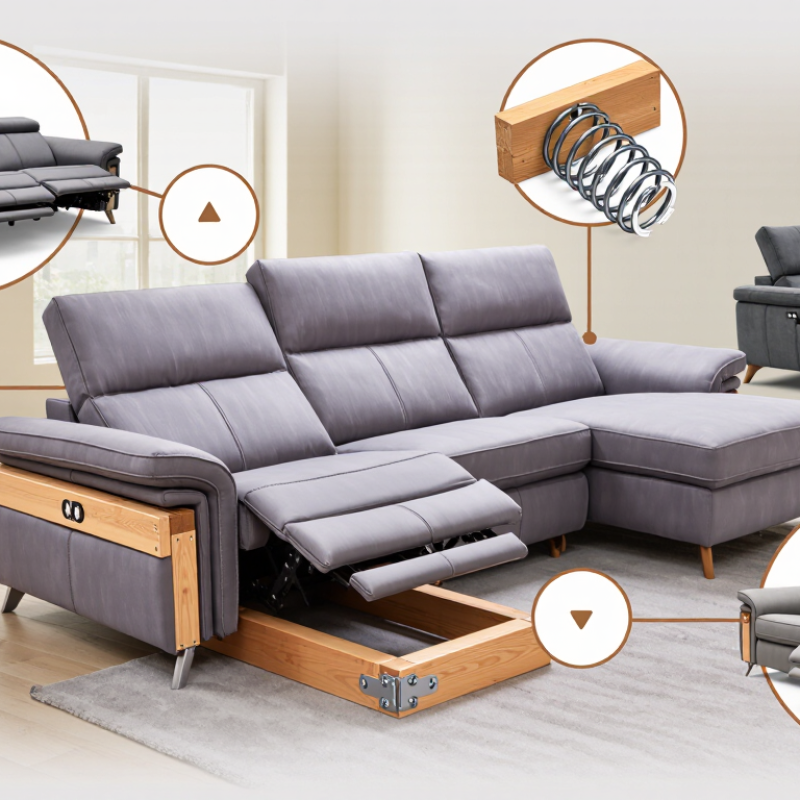
| Reclining Sofa |
75–100 in
(191–254 cm) |
Media rooms
Large family rooms
|
Two to three people |
Offers adjustable leg and back support for extended sitting. |
Moving hinges, springs, cables, electric or manual mechanisms, and metal components rubbing under changing load. |
Keep the mechanism clear, inspect cables and brackets, tighten loose fasteners, and use only the lubricant recommended for the mechanism. |
Medium to high |
| Chaise Sofa |
85–125 in
(216–318 cm) |
Relaxed living rooms
Open-plan spaces
|
Three to four people |
Provides extended leg support while retaining the appearance of a conventional sofa. |
Uneven weight distribution, stress at the chaise-to-sofa junction, loose feet, or frame flexing under the extended seat. |
Level the feet, tighten the joining hardware, avoid concentrated loads at the junction, and inspect the support frame for cracks. |
Medium |
| Apt-Size Sofa |
60–80 in
(152–203 cm) |
Small apartments
Narrow rooms
Home offices
|
Two to three people |
Fits tighter floor plans while preserving standard sofa comfort. |
Frequent movement in a lightweight frame, loose legs, floor contact, or insufficient support beneath the seat. |
Check leg connections, use level and non-slip floor pads, avoid sitting repeatedly on one edge, and inspect the seat deck for looseness. |
Low to medium |
| Daybed Sofa |
65–85 in
(165–216 cm) |
Studio apartments
Sunrooms
Guest spaces
|
Two to three people |
Works as a sofa, lounging surface, and occasional sleeping space. |
Slat movement, loose platform fasteners, wood joints flexing, or cushion frames rubbing against the base. |
Tighten platform screws, add felt at wood contact points, check the support slats, and keep the base level. |
Medium |
 Hee Living